
Gratama Foundation
The Gratama Foundation, founded and based in Harlingen, works with the Groningen University Fund to provide funding for small-scale academic projects, designed and conducted by the University of Groningen.
Gratama Grants
GUF/Gratama Foundation grant proposal round
Every year, the faculties of the University of Groningen are invited to apply for a grant from the Gratama Foundation. The maximum amount for a single grant is
€ 5000 - € 25,000 and the total budget is around € 100,000.
More information: guf rug.nl
Application
An application should consist of:
-
Fully completed and signed application form
-
Summary in Dutch
-
A project proposal
-
An itemized budget including an expenditure timetable
-
A signed letter from the faculty, research group or chair group about the support they will provide to the submitted research plan
-
A concise CV
-
Applications in English or other languages must contain a detailed summary in Dutch, which is written in such a way that the general public is able to understand it
Attention: the application procedure has been changed.
Applications can only be submitted through an online web form, that will be available from February 1 to February 28, 2027, 23.59 CET.
Criteria
The following criteria will be taken into account when assessing applications:
-
The projects must be related to teaching, pioneering research or a specific field of application, but must not be eligible for fundamental research funding.
-
The faculty or department must make a substantial contribution to ensure that the project runs smoothly and is completed successfully. At the very least they must commit to making every effort possible, such as providing man-hours (requirement for matching).
-
The projects must not only be of scientific interest but also socially relevant.
-
Projects with predominantly long-term personnel costs are more likely to be unsuccessful. An exception can be made for short-term projects with a specific ultimate aim. Personnel costs for current UG employees will not be reimbursed.
Procedure
-
Applications must have been received by the GUF by 28 February 2027.
-
The GUF will assess all project proposals which were received on time in April 2027. It may request advice from faculty research committees or other experts.
-
The GUF board selects a number of projects within the available funding to forward to the board of the Gratama Foundation and reserves the right to reduce the proposed budget in consultation with the applicant.
-
The Gratama board will make its final decision regarding the allocation of grants in May 2027.
-
The GUF board will then inform the applicants of the respective decisions at the start of June 2027.
Subsidierondes
Gratama Science Award
Description
The Gratama Science Award is an incentive award for young and active academics from the universities of Groningen and Leiden, who distinguish themselves through innovative, societally relevant, and remarkable research.
The award is given for research that they have conducted within five years after finishing their PhD. Although it is not required for the research to have been carried out at the universities of Groningen and Leiden, the researchers must be affiliated with one of these universities at the time of their nomination. The nomination must be made within seven years after finishing their PhD, and candidates may not be older than 40 years at the time of the nomination.
Relevant academic fields
The Gratama Science Award covers the full breadth of academic research at both universities. In the absence of nominations of sufficient quality, the award may be withheld.
Nomination
In the year in which the Gratama Science Award can be awarded to a candidate from the university in question, any faculty of the University of Groningen or Leiden University can nominate one candidate for the jury (see under 'Jury’ below).
Nominations must be submitted in Dutch.
The closing date for submitting the nominations is 28 February and the call for nominations takes place around 1 November of the year prior to the award ceremony.
Jury
The assessment of the nominated candidates is based on the recognition of their research achievements, which must not only be of high quality, but must also satisfy three main criteria: innovative, societally relevant, and high-profile.
Nominations from the University of Groningen are assessed by the Groningen University Fund, whereas nominations from Leiden University are assessed by the Committee for Academic Expenditure of the Leiden University Fund.
These bodies must, each for their own university and in the year in which the prize may be awarded to their university, submit a non-prioritized nomination of three candidates to the board of the Gratama Foundation before 1 April, based on the nominations submitted by the faculties.
A jury, consisting of this board and its two scientific advisors, affiliated to the universities of Groningen and Leiden respectively, will choose a winner from the nominations.
Award ceremony
In even-numbered years, the award ceremony of the Gratama Science Award takes place in Groningen and in uneven-numbered years, it takes place in Leiden. The time and location of the award ceremony is determined and communicated annually. Following the announcement of the three nominees and in the period around the Gratama Science Award ceremony, publicity is generated for both the winner and the two other nominees.
Amounts and expenditure conditions
The Gratama Science Award is €20,000 and the winner must spend it on a purpose that contributes to their further academic development. Personal expenditures are therefore not permitted. However, the prize money may be spent on, for example, a study trip and accommodation, documentation, equipment, and/or student assistants for research. The Gratama Foundation pays the amount to a bank account specified by the university in question. The university is subsequently responsible for monitoring the expenditures.
The other two nominees each receive €2,500 which they can spend on their further academic development.
Nominees
In the year in which the Gratama Science Award can be awarded to a candidate from the university in question, any faculty of the University of Groningen or Leiden University can nominate one candidate for the jury. The winner receives €20,000, and the other two nominees each receive an amount of €2,500 to spend on their further academic development.
Winners
The Gratama Foundation has been making annual amounts of € 20,000 available since 2011 to award a ‘Gratama Science Award’ to students of the universities of Leiden and Groningen. The prize is awarded alternately by the universities in Groningen and Leiden to a young, promising academic.
2024
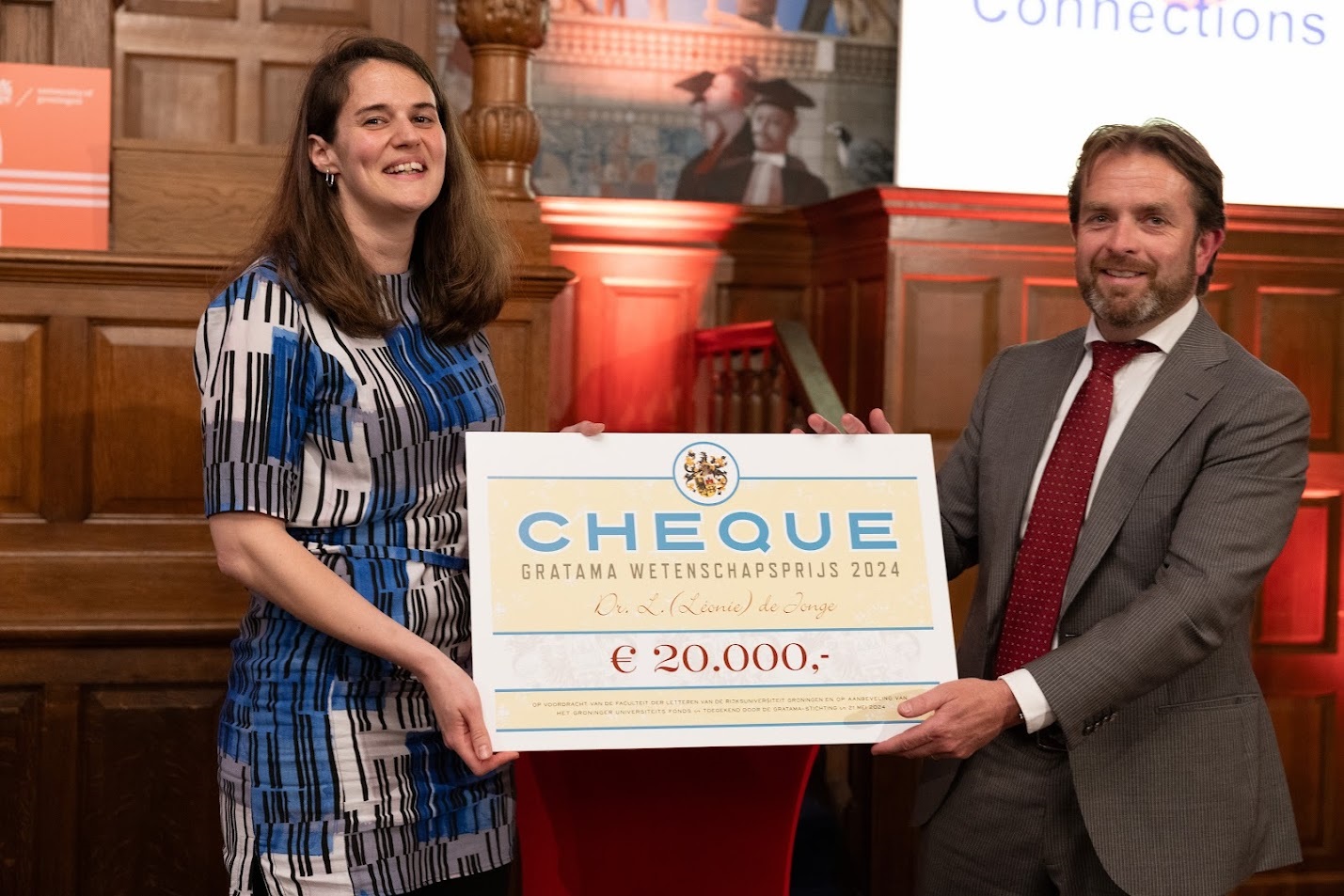
On 22 November 2023, the elections for the Dutch House of Representatives caused a lot of turmoil in Dutch politics. On that day, in the NOS broadcast Nederland Kiest [The Netherlands Votes], Léonie de Jonge was among the first to clearly explain the electoral victory of the right-wing party PVV–a victory that was unimaginable to many. The fact that, in that moment, De Jonge was asked to share her insights with the audience illustrates her position as an all-round respected public academic. She frequently issues advice about how to deal with far-right newcomers in representative bodies and warns of the risk of radicalization of extreme-right individuals and groups.
Léonie de Jonge’s reputation does not appear out of thin air. She was educated in Cambridge, where she earned her PhD in 2019 with a thesis titled The success and failure of right-wing populist parties in the Benelux, and she developed herself into a political scientist who is nationally and internationally renowned for her remarkable knowledge and understanding of the ideology and influence of extreme-right parties and actors in Europe. In her comparative study, she shows that the role of the media and the space that is given to right-wing populism in the public sphere are decisive for the success of parties such as the PVV. As a lecturer, De Jonge encourages her students to devote themselves to one of the major societal challenges of today: the political radicalization and polarization around issues such as identity politics, migration, and increasing inequality. In addition, through her roles as vice-chairperson of the Young Academy of the Royal Netherlands Academy of Arts and Sciences (KNAW) and member of the Young Academy Groningen, she initiates discussions about diversity and academic freedom.
The Gratama Science Award has found an outspoken winner in Léonie de Jonge with the great significance of her versatile and in-depth publications and her active role in the societal debate. Her academic work has exposed the normalization of radical and extreme-right stances and discourses in European democracies. Extreme-right opinions expressed by politicians about migration and national identity are spread by journalists and can subsequently be heard in all sections of society. As a result, they also have a far-reaching influence on the moderate middle of politics and society. The fact that De Jonge’s ideas about the spread and normalization of the radical and extreme-right ideology are being heard can sadly also be seen by the fierce and hateful responses they evoked. The Gratama Science Award is also a reward for Léonie’s civil courage, as she is one of the many academics who, in the face of threats and intimidation, passionately continues with her academic work.
2022
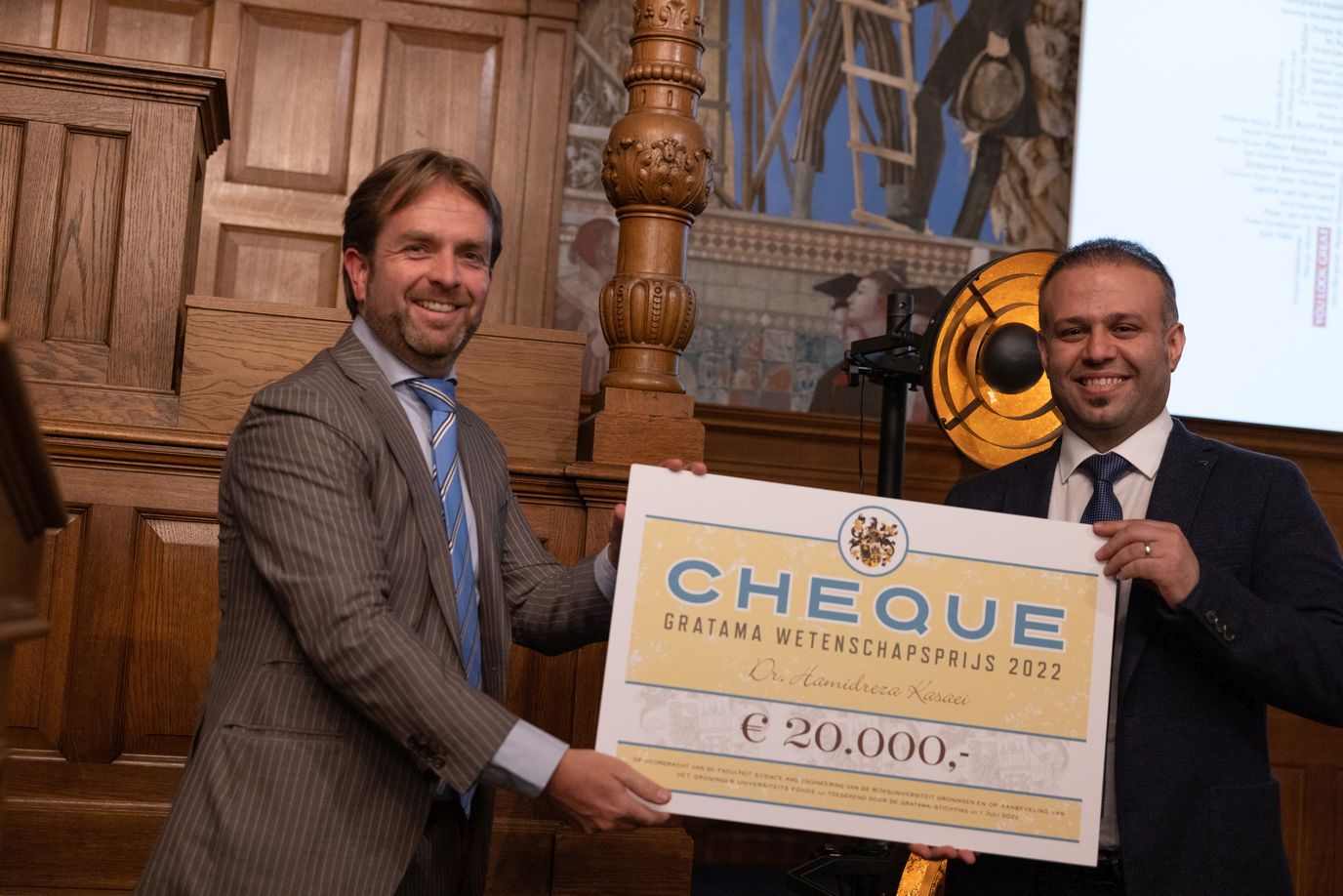
On 1 July 2022 the Gratama Science Award has been awarded to dr. Hamidreza Kasaei (1986), an assistant professor at the Faculty of Science and Engineering and chair of the Robot Learning Lab (IRL-Lab), part of the Autonomous Perceptive Systems (APS) group. His research on data-efficient open-ended machine learning methods has contributed to a breakthrough in cognitive robotics. In addition, he has also made an important contribution to the renewal of the Robotics degree programme, which is attracting a strongly increasing number of students. Kasaei is also a prominent speaker at leading global conferences on robotics and machine learning.
Nowadays, robots are rather capable of completing fixed tasks within a defined environment, however changes in the environment or task require complex, time-consuming, and thus expensive, re-programming by experts. Kasaei initiated the Lifelong Interactive Robot Learning lab, in which robots learn to adapt to new environments, gradually learn new concepts, and learn to communicate with non-expert human users, without any need for re-programming.
His research into two-armed robots that learn to manipulate objects based on visual information has drawn a great deal of international attention. This is leading to the development of a wide range of socially relevant applications, from agricultural robots that can boost productivity to care robots that can lighten the load in the medical sector during a pandemic.
Kasaei has been affiliated with the Computer Vision and Machine Learning lab of Imperial College London and was granted the Robotics: Science and System Pioneers Award in 2019.
2020
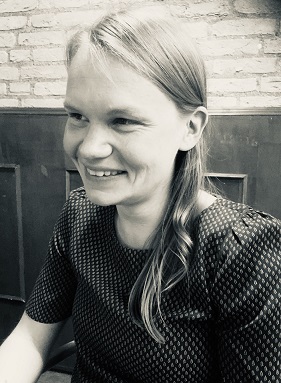
On 3 July 2020 the Gratama Science Award has been awarded to Dr Ymkje Anna de Vries of the Faculty of Behavioural and Social Sciences of the University of Groningen.
De Vries followed degree programmes in the fields of neuroscience, clinical science and psychosocial sciences at three UG faculties as well as the University of California. Her research takes an innovative approach, linking pharmacological results to adolescent behaviour. She studies depression in young people, and in particular the effectiveness of antidepressants and the consequences of administering them.
Ymkje Anna de Vries’s PhD thesis shows that the effectiveness and safety of pharmacological treatment for anxiety and depression, the most common psychiatric disorders among young people, are overestimated as a consequence of incorrect assumptions in existing publications. She claims that these disorders (as well as other disorders that emerge relatively late in life) can be prevented by identifying relatively mild, easily treatable problems in young people.
De Vries has already received two other prizes for her PhD thesis: one from the UMCG and one from the Royal Society for the Natural Sciences (Koninklijk Natuurkundig Genootschap). She also has a notable list of publications to her name. The Netherlands Initiative for Education Research of the Dutch Research Council has awarded her and two other researchers a research grant for a comparative study on anxiety and depression in secondary school pupils.
De Vries would like to use the € 25,000 prize money to go to the Harvard Medical School in Boston to study easy-access interventions that can be used to make students more resilient against stress. She subsequently wants to use this knowledge at the UG to monitor students for stress factors and intervene if necessary.
2018
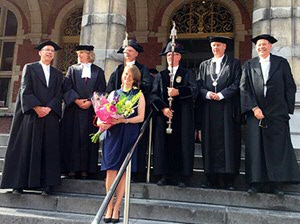
De Gratama Wetenschapsprijs is 6 juli 2018 uitgereikt aan Marthe Walvoort. Marthe Walvoort (1983) promoveerde in 2012 cum laude op haar onderzoek naar de synthese en toepassing van nieuwe bacteriële suikerbouwstenen. Ze leverde een belangrijke bijdrage aan de ontwikkeling van geautomatiseerde synthese van lange suikerketens, wat haar wereldwijd tot één van de eerste onderzoekers maakte die deze uitdaging is aangegaan. Walvoort heeft zich vervolgens tijdens een postdoctoraal verblijf aan het Massachusetts Institute of Technology (Boston, VS) toegelegd op de biologische productie van suikers, en de rol die suikereiwitten spelen in bacteriële infecties. Hier ontdekte ze een mogelijk verband tussen een bacteriële infectie en de auto-immuunziekte multiple sclerose.
Sinds november 2015 is Walvoort aangesteld als universitair docent (tenure-track) en Rosalind Franklin Fellow aan de Faculty of Science and Engineering van de Rijksuniversiteit Groningen. Haar eerste onderzoekslijn richt zich op de bijzondere suikers die van nature in moedermelk aanwezig zijn, maar in babymelkpoeder ontbreken. Deze suikers dragen bij aan een gezonde ontwikkeling van de pasgeborene, maar er is nog weinig over bekend. Door deze suikers na te maken in het laboratorium hoopt ze te kunnen begrijpen welke moleculen de gezondheidseffecten van moedermelk veroorzaken. Recentelijk heeft Walvoort een NWO-CCC subsidie (500k euro) ontvangen om deze onderzoekslijn uit te breiden door middel van een samenwerking met het UMCG en de industriële partners FrieslandCampina, AVEBE, en Nuscience. In 2016 heeft Walvoort een NWO-VENI-subsidie (250.000 euro) toegekend gekregen. Hiermee is ze een tweede onderzoekslijn gestart, waarin ze bacteriële suikereiwitten onderzoekt. Bij elkaar genomen heeft Walvoort in korte tijd een indrukwekkende combinatie van onderzoeksprojecten vormgegeven, waarmee ze hoopt bij te dragen aan gezondheid van de mens.
2016
Michel Vols krijgt dit jaar de Gratamaprijs. Hij is uitgegroeid tot een internationaal toonaangevende onderzoeker op zijn vakgebied, met een originele onderzoeksbenadering en een opmerkelijk maatschappelijk effect. Zijn bijzondere uitgangspunt is dat het recht niet alleen geschillen moet beslechten, maar ook problemen moet oplossen. De Gratama-Stichting concludeert dat het werk van professor Vols duidelijk laat zien hoe jonge wetenschappers creatief kunnen omgaan met uitdagende vragen, een vernieuwende aanpak en maatschappelijke relevantie en die drie elementen ook succesvol weten te combineren.
2014
Tijdens de Zomerceremonie op vrijdag 4 juli werd de prijs aan mw dr. A.K.H (Anna) Hirsch (1984), universitair docent bij de Faculty of Science and Engineering van de RUG uitgereikt.
Anna Hirsch is met 'First Class Honours' afgestudeerd in Scheikunde aan de Universiteit van Cambridge. Haar promotietraject is aan de ETH Zürich in Zwitserland gestart waar zij de eerste remmers tegen een drug target op een rationele manier heeft ontwikkeld die een belangrijk startpunt zijn in de strijd tegen malaria. Als postdoc heeft zij in de groep van Nobelprijswinnaar Prof.dr. J.-M. Lehn in Frankrijk met een onderzoekbeurs voor grensoverschrijdend onderzoek gedaan, waar zij slimme polymeren heeft ontwikkeld die op eiwitten lijken maar op hun omgeving kunnen reageren. Sinds 2010 is zij universitair docent in de Bio-organische Chemie. Zij ontwikkelt baanbrekende strategieën voor de identificatie en optimalisatie van moleculen die in de toekomst als nieuwe geneesmiddelen voor bedreigende ziektes zoals malaria of tuberculose zouden kunnen worden gebruikt. In haar interdisciplinair en vernieuwend onderzoek, mede mogelijk gemaakt door nationale en internationale samenwerking en haar achtergrond in de medicinale chemie en dynamische combinatoriële chemie, gebruikt ze een combinatie van experimentele en computer-gebaseerde technieken op een unieke manier.
2013
Viktor Venhorst is cum laude afgestudeerd in de Demografie en heeft daarnaast een master Economie. Zijn proefschrift ‘Smart Move? The Spatial Mobility of Higher Education Graduates’, werd gewaardeerd met het judicium Cum Laude (2012).
Naast zijn promotietraject heeft Viktor het project ‘Brain drain of brain gain; hoger opgeleiden in grote steden in Nederland’ uitgevoerd, in samenwerking met Nicis Institute in Den Haag en een consortium van vijf Nederlandse steden. Daarvoor (2006–2007) heeft Viktor gewerkt aan een onderzoek naar bevolkingskrimp in de drie noordelijke provincies, in samenwerking met een aantal woningcorporaties. Onderzoek naar de locatiekeuzes van hoger opgeleiden heeft de afgelopen tien jaar ook internationaal een hoge vlucht genomen. Het beschikbaar komen van microdata heeft dit in belangrijke mate gefaciliteerd. Zowel lokale als landelijke overheden realiseren zich dat de aanwezigheid van goed opgeleide werknemers, en de mate waarin zij hun vaardigheden kunnen toepassen op de regionale arbeidsmarkt, van groot belang is voor de toekomstige ontwikkeling van regio’s. Daarnaast is er veel interesse in de rol van deze groep in het opstarten van innovatieve bedrijven, bijvoorbeeld in samenwerking met de hogescholen en universiteiten in een gebied. Dit betreft niet alleen de kernregio’s maar zeker ook als de meer intermediaire en perifeer gelegen gebieden, waar een belangrijk deel van economische ontwikkeling gerealiseerd wordt.
2011
Tijdens de Zomerceremonie van de RUG werd de prijs aan dr. Robbert Maseland, universitair docent bij de Faculteit Economie en Bedrijfskunde van de RUG uitgereikt.
Dr Robbert K.J. Maseland (1975) is universitair docent bij de faculteit Economie en Bedrijfskunde van de RUG en studeerde ontwikkelingsstudies en toegepaste economie aan de Radboud Universiteit Nijmegen. Aansluitend was hij werkzaam als onderzoeker-docent bij de Nijmeegse universiteit en promoveerde er in 2006. Sinds 2009 is hij als universitair docent verbonden aan de afdeling International Economics and Business van de RUG. Maseland heeft volgens de jury een fundamentele bijdrage geleverd aan het economische vakgebied door een integratie van waarden en normen in economische theorievorming. Schijnbaar moeiteloos verweeft hij inzichten uit de sociologie en de psychologie met economische theorie, waarbij hij de controverse niet schuwt. Maseland heeft in publicaties in vooraanstaande tijdschriften, waaronder Nature, aangetoond dat een groot deel van de bestaande methoden om waarden en preferenties te meten feitelijk onjuist is. Volgens hem weerspiegelen verschillen in economisch keuzegedrag eerder de omstandigheden dan diepgewortelde waarden en opvattingen. In feite, aldus Maseland, zouden de meeste mensen onder gelijke omstandigheden hetzelfde gedrag vertonen.
Nominees
Vanuit de Rijksuniversiteit Groningen (dan wel de Universiteit Leiden) kan elke faculteit, in het jaar dat de Gratama Wetenschapsprijs aan een kandidaat van de desbetreffende universiteit kan worden toebedeeld, één kandidaat aan het beoordelende college voor de prijs voorstellen. De uiteindelijke winnaar ontvangt € 20.000, de twee andere genomineerden krijgen elk een bedrag van € 2.500, te besteden aan hun verdere wetenschappelijke ontplooiing.
2024
Dr Casper van der Kooi, Faculty of Science and Engineering
Casper van der Kooi has been assistant professor of Evolutionary Biophysics since 2023. His research is eminently interdisciplinary: he uses techniques from physics, i.e. optics, to understand the evolution of colours in flowers and insects. Over the past years, Casper gained insight into how various flower parts—pigments, internal structure, surface— contribute to the visual signal of flowers through an optic model and a detail study. Behavioural experiments with moths and bees revealed how insects react to visual effects. He published about this in top journals, such as Science, Current Biology, and Proceedings of the Royal Society B. Casper is a member of the Young Academy Groningen, editor of the scientific journal Annals of Botany and he issues advice to political parties about agriculture, nature, and biodiversity. The media frequently approach him for background information on current biodiversity questions, e.g. nitrogen, invasive exotic species. During these media performances, he emphasizes the importance of fundamental research. He uses concrete examples to explain that our living environment and biodiversity are under pressure, and what citizens can do about it. The University has made a short video about Van der Kooi’s research, which can be watched here.
Dr Susan Niessen, Faculty of Behavioural and Social Sciences
Susan Niessen carried out groundbreaking research in the academic field of selection psychology. Selecting people for degree programmes, jobs, and positions in the best possible way has far-reaching implications. For an honest and successful society, it is important to have the right people in the right place, where everyone is assessed in the same way, regardless of gender or background, for example. This is not an easy task and the selection psychology field has been concentrating on how to best go about it for quite some time, based on empirical research but within changing societal frameworks. In her PhD thesis, Susan investigated the best way to select candidates for higher education. With this research, she laid the empirical foundation for widely used selection practices in higher education. A good selection is not only important when selecting students and job applicants but also in the world of sports and in the army. After receiving her PhD in 2018, Susan further shaped her research line by focusing on the way in which decisions are made during selection procedures and how this can be improved. An important isue is how we can use transparent algorithms, provided they are well designed. For her research, Susan received nearly €1.5 million in government funding from regular grant providers but also, for example, from the Ministry of Defence. The societal impact of her work also shows in her work concerning selection for the Dutch National Police Force, Council for the Judiciary, Dutch Commando Corps, and the national Board of Tests and Examinations.
2022
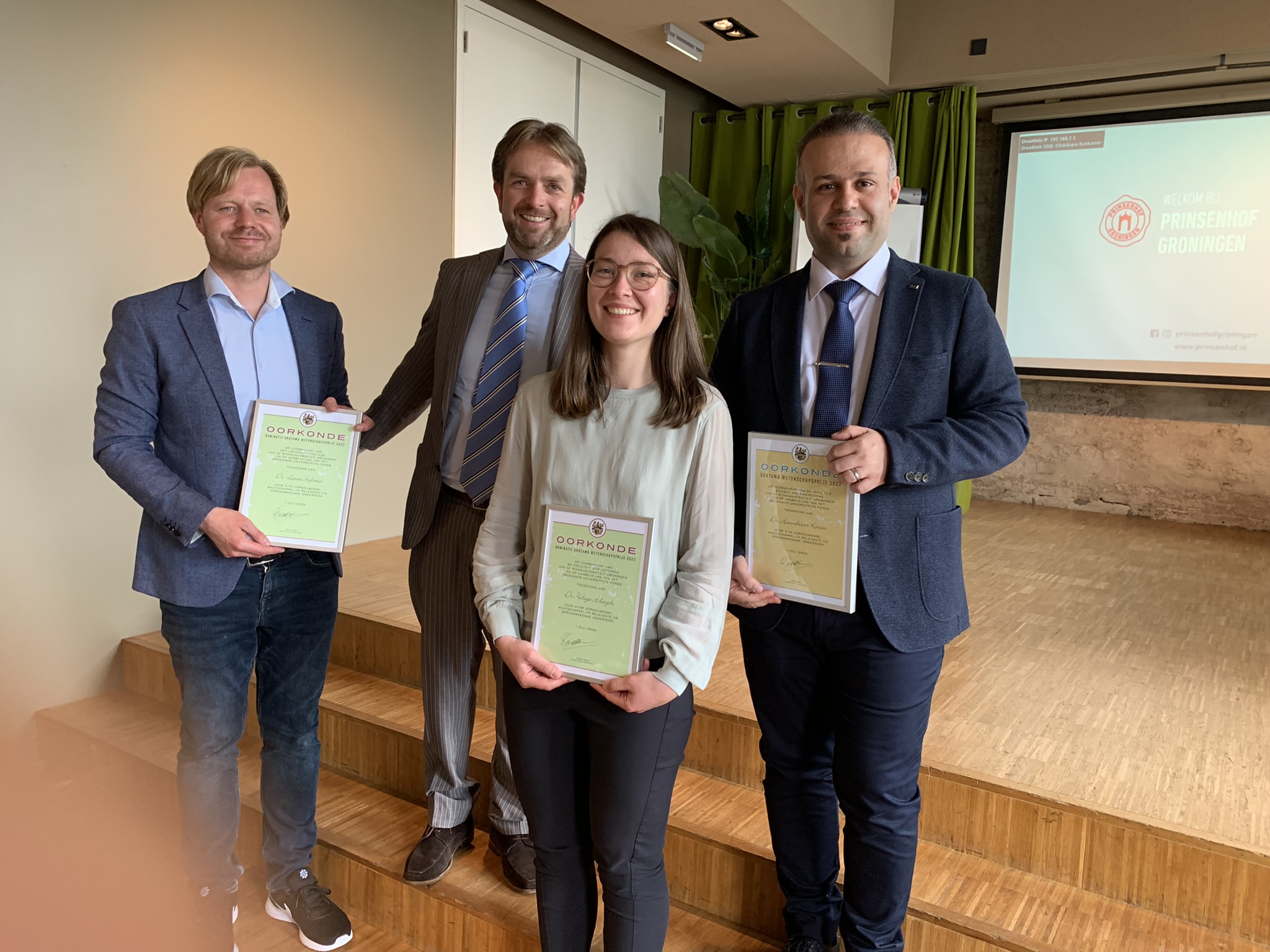
Dr. Yuliya Hilevych, Faculty of Arts
Yuliya Hilevych (1988) is an assistant professor at the Faculty of Arts. She is conducting historical research into human reproduction, the social history of infertility, and of reproductive technology in Europe. Her research focuses on the human experience and search for meaning, as well as on social institutions and collective action, and shows how a humanities-based approach produces socially relevant results that can lead to innovative solutions to social problems. Dr Hilevych analyses social movements surrounding reproduction and the practice of abortion and relates them to large social issues such as population shrinkage, war, infertility, and childlessness.
In her PhD thesis, she showed that there were different abortion cultures and reproductive practices in Soviet Ukraine, which is extremely relevant for the current debates on the criminalization of abortion in some East European countries. The results of her research on shrinkage and war over the past eight years in eastern Ukraine are particularly relevant in the context of the current war in the country. She is currently writing a monograph on the social history of infertility. In addition, she is also one of the leaders of a large-scale project for Horizon Europe on gender relations and demographic crises in Eurasia.
Yuliya Hilevych is working together with renowned researchers affiliated with the universities of Cambridge, Oxford, and Lincoln. She is an in-demand speaker at universities, research institutes, and in national and international policy circles. Her contributions to the briefing papers of the United Nations in Washington, advice issued to the Ministry of Justice and Security, and media appearances attest to the broad reach of her research.
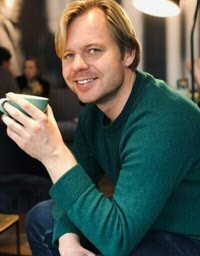
Dr. Lieuwe Zijlstra, University College Groningen
Lieuwe Zijlstra (1983) is affiliated with University College Groningen as assistant professor. He is an interdisciplinary researcher in the new field of experimental philosophy. Lieuwe Zijlstra’s academic career displays both his academically innovative and socially relevant qualities. A typical characteristic of his interdisciplinary research is that he conducts both empirical and philosophical research into topics that are directly linked to social issues, or on our daily life.
In his PhD thesis, he researched whether people are inclined to think that moral judgements are objectively correct or incorrect by combining philosophical research findings with conducting psychological experiments. During his PhD research in Groningen and Ghent, he conducted research at Yale University for a year and a half under the supervision of Joshua Knobe, leader in the experimental philosophy research field. This is a highly demanding field of research. It requires command of conceptual analysis and logic, as well as expertise in empirical research methodology and statistics. Zijlstra is a pioneer in the Netherlands. He is working on academic issues in moral psychology, perceptions of personal identity, happiness and search for meaning, as well as on the topic of moral progress.
In his interdisciplinary lectures at the University College Groningen, he asked students to research the relationship between memory and identity, the subjective experience of happiness in social groups, and the origins of moral judgements.
Gratama Anniversary Gift 2025
Anniversary
Today’s complex societal challenges rarely, if ever, exactly fit into the framework of one single area of expertise or one single specialism. It is, therefore, of great importance that academics, in consultation with one another, look beyond the borders of their own domain and discipline when looking for the solutions to these challenges.
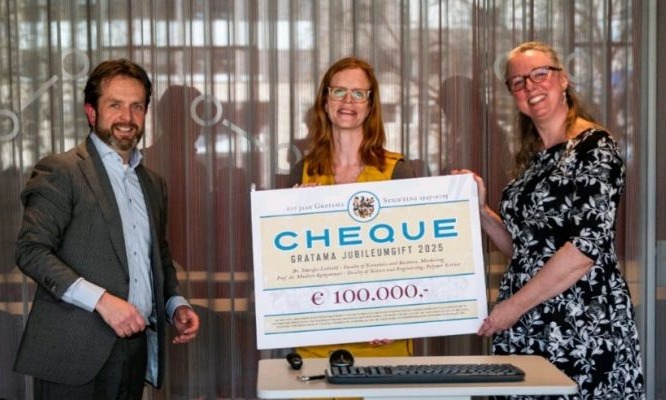
In order to stimulate this and to celebrate their 100-year anniversary, the Gratama Foundation has made a grant available of €100,000 through the GUF:
the Gratama Anniversary Gift 2025.
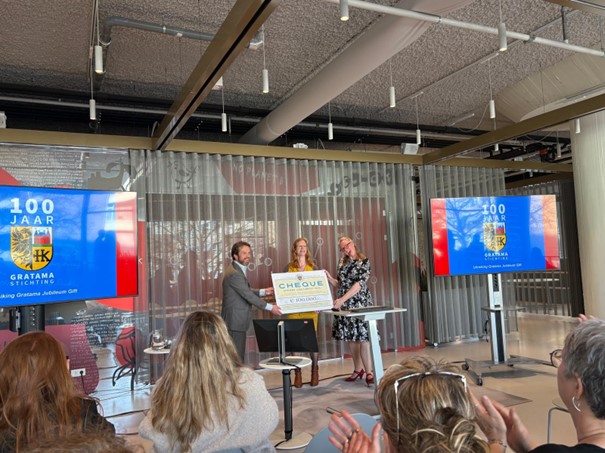
Prof. Dr. Marleen Kamperman of the Faculty of Science and Engineering, together with Dr. Marijke Leliveld of the Faculty of Economics and Business, has received a gift of €100,000 from the Gratama Foundation. They receive the one-time prize for their research project aimed at producing organic textiles for sustainable fashion.
The prize was presented on March 28 during the symposium 'The Future of Textiles: Creating Sustainable Ecosystems'.
Textiles from fungi
In this project, Kamperman will work with Studio Veenhoven to improve the properties of mycelium materials. This is a material made from fungi and fungal threads (e.g. remnants of oyster mushroom cultivation). It is 100% biodegradable and you can grow it in all kinds of shapes. These materials are very suitable for making textiles. New biological materials such as mycelium can significantly change the fashion industry and contribute to responsible consumption and production.
Consumer in mind
Current materials are not yet strong enough and can be torn quite easily. The goal is to optimize the material to meet the needs within the fashion industry. In addition to researching the material side of mycelium, the researchers will be investigating the consumer side. Kamperman: ‘Through the rapid exchange of these insights to each other and thus the interaction between material science and consumer behavior, we are working toward a product that both industry and consumers are interested in.’