
Research & education
Learning from and with practice
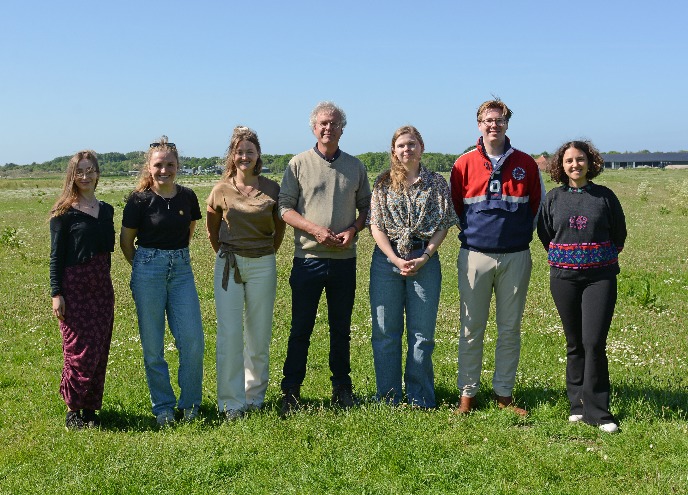
At CDLT, knowledge only counts once you can do something with it. That is why we do transformative, practice-driven research: in the region, with farmers at the table. Our research questions come from practice and produce knowledge that farmers and other parties can apply directly in the transition to sustainable agriculture.
Ongoing research
Change as a Condition of Continuity
The world is continuously changing. Farmers are facing more frequent droughts, geopolitical developments, stricter regulations, and evolving societal expectations. This research explores how regenerative ways of thinking and doing can contribute to a more resilient agricultural system in Limburg, the Netherlands. The focus is on strengthening farmers’ adaptive capacity, which refers to their ability to cope with, adapt to, and transform in response to a changing context and emerging crises.
Project 1: Leverage points for system transformation
The first project identifies leverage points at the farm and landscape levels to support the development of a resilient agricultural system in Limburg, where disease and pest outbreaks can be prevented. This is expected to reduce the dependency of farmers on agrochemicals for crop protection.
Project 2: Shocks and stressors in agriculture
Farming operations can be strongly affected by shocks (i.e., sudden events such as floods or pest outbreaks) and stressors (i.e., long-term trends such as climate change). The second project explores the role of these drivers in shaping farming trajectories. This is expected to contribute to a greater understanding of what enables farmers to cope with, adapt to, and transform in the face of shocks and stressors.
Project 3: Learning to navigate change and uncertainty
The future of agriculture in the Netherlands is marked by uncertainty. This uncertainty can trap us in a cycle of reacting to one crisis after another. Proactive strategies are needed to shape the future. Therefore, the third project uses scenario development to identify proactive strategies to stimulate desirable transitions, prevent undesirable transitions, and monitor both.
Business Models for Regenerative Arable Farming
Regenerative agriculture restores soil and nature, but switching to it is a big step for farmers, with financial and operational risks. This PhD research looks at how arable farmers in the (northern) Netherlands make the switch and build a healthy business, both now and in the future. The aim is to help farmers, and the people around them, take this step with more confidence.
Project 1: Making the switch
The first years after switching are often the hardest: yields drop for a while and investments take time to pay off. We study what farmers need to get through this period, such as money, land, knowledge, entrepreneurship and a strong network. To do this, we talk to farmers who have made the switch or are in the middle of it, and to strategic advisors in the agricultural sector.
Project 2: How exactly do successful regenerative farms work?
We look at farmers who have already switched successfully and how their business works: what they sell, who they sell to and who they work with. From these examples, we identify a number of recognisable types of farm businesses. Other farmers and advisors can use them as inspiration for the transition of other farms.
Project 3: How do these businesses keep developing?
A business never stands still, and past choices shape what is possible later on. We study how regenerative arable farms have developed over the years. Together with experts, we explore where they could go in the future.
Farmers’ Logics in Agricultural Transitions
For many farmers, farming is more than a profession: it is a way of life closely connected to identity and values, which help shape what is taken for granted within agriculture. This research focuses on how these taken-for-granted ways of thinking and doing influence farmers’ choices and where opportunities for regenerative agriculture may lie.
Project 1: Self-evident assumptions in agriculture
The first project examines the ways of thinking and doing that are considered normal and taken for granted within agriculture. It explores how formal rules and informal norms and values translate into everyday routines and practices, thereby influencing what farmers consider desirable, realistic, successful, or even possible.
Project 2: Navigating transitions
The second project focuses on farmers at different stages of transition towards regenerative agriculture. It examines how they shape their work within the existing agricultural system and how regenerative values and practices develop throughout this transition.
Project 3: Room for new perspectives
The third project focuses on supporting change in agricultural practice. Together with farmers, advisors, and other stakeholders, practical methods and tools are developed to encourage reflection on taken-for-granted assumptions and explore alternative ways of thinking and doing.
Learning from the Landscape
Landscape and water together form an important source of knowledge for the agricultural transition. They are the foundation of agriculture and bring together historical, ecological, social and economic processes. This research focuses on eastern Groningen, a large-scale arable farming landscape shaped by the long interaction between people and water. By connecting the past, present-day use and possible futures, the research explores which place-based choices can contribute to resilient agriculture in a changing landscape.
Project 1: Past
Historical water structures are mapped to study the development of the landscape and to examine what starting points they offer for future water management in this agricultural landscape.
Project 2: Present
This project examines how farmers, residents, policymakers and other stakeholders use, experience and value the landscape. These different perspectives are important for developing a shared future perspective for the area.
Project 3: Future
Findings from the first and second projects are brought together to develop future scenarios. Together with stakeholders, the project explores which place-based choices can contribute to future-proof agriculture and water management in the East Groningen.
Knowledge Infrastructures in Agriculture
Knowledge plays a central role in the agricultural transition. From the farmyard to the realms of policy and research. But which forms of knowledge count when it comes to decision-making? Which types of knowledge are given weight in policy, research, and digital systems, and which remain out of sight? What are the consequences of this, and how do these disparities arise?
The underlying knowledge infrastructures determine what specific knowledge is produced and utilized, for instance, within policy and decision-making processes. This research focuses on how such knowledge infrastructures can support the transition toward regenerative agriculture. It also examines how nature and ecological processes themselves hold and generate knowledge, and how this is reflected within these infrastructures.
Project 1: Knowledge and decision-making on the farm
Understanding and mapping knowledge infrastructures in everyday practice on the farm. Which knowledge, information and data play a role in farmers’ decision-making, and what role do knowledge infrastructures play in this? What potential mismatches exist between knowledge and practices on the farm and the formal knowledge infrastructures that support and steer these practices? This first project focuses on dairy farms around Amsterdam, particularly in the Holland-Utrecht peat meadow area.
Project 2: Developing improvements together
Exploring and co-developing knowledge infrastructures together with farmers and advisers, in order to better connect different forms of knowledge and support the transition to regenerative agriculture. Building on the potential mismatches identified in Project 1, this project investigates how knowledge infrastructures can be adapted, supplemented or redesigned.
Project 3: Practical application
Monitoring how these adapted knowledge infrastructures are used in practice. What changes in the way knowledge is produced, shared and recognised, and how do these changes contribute to the transition to regenerative agriculture?
Behavior Change Interventions in Regenerative Agriculture
This research explores the factors that influence farmers’ adoption of sustainable policies that support the transition towards regenerative agriculture. It examines the role of behavioral factors and institutional trust in policy adoption, and uses these insights to develop a targeted behavior change intervention that can support farmers in this transition.
Project 1: Eco-scheme adoption among Frisian Farmers
This project uses interviews to gain a better understanding of why dairy farmers in Friesland adopt the eco-scheme. It focuses on the capabilities, opportunities, and motivations that influence farmers’ adoption decisions.
Project 2: The role of institutional trust
This research examines the role of trust in institutions in farmers’ adoption of sustainable policies. Using survey data from farmers across the Netherlands, it investigates the relationship between institutional trust, perceptions of policy legitimacy, and policy adoption.
Project 3: Behavior Change Intervention
This project is currently in development and will build on the insights from the first two projects. The goal is to develop and test a behaviour change intervention that addresses key barriers to policy adoption and supports farmers in adopting sustainable practices that contribute to the transition towards regenerative agriculture.
Publications
Perspective on the Agricultural System.
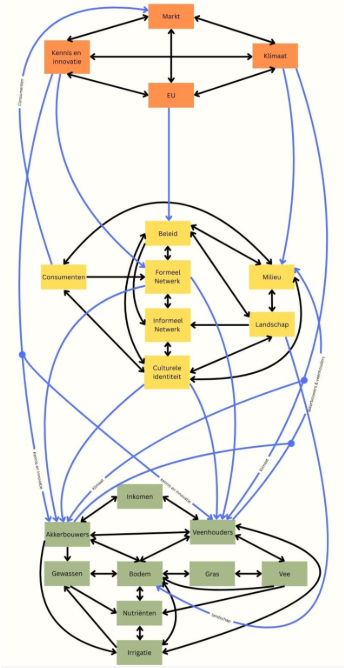
Within CDLT (Centre of Sustainable Agriculture Transition), we are working together on a transition to regenerative agriculture. The question is: a transition from what, exactly? From different perspectives, CDLT’s PhD researchers have mapped the Dutch agricultural system: from the farmyard to policy in Brussels.
-
Read here about their perspective on the agricultural system.
Research Report: Developing Business Models for Regenerative Agriculture in Northeast Friesland and Twente
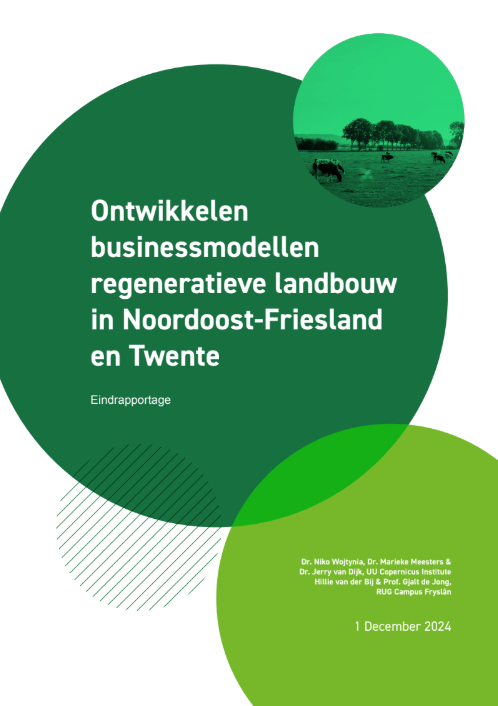
The Center for Sustainable Agricultural Transition (University of Groningen) and the Copernicus Institute (Utrecht University) have joined forces, at the request of the Ministry of Agriculture, Fisheries, Food Security, and Nature (LVVN), to develop new business models for regenerative agriculture in Northeast Friesland and Twente. Read more.