

Ambassadors

The Data Autonomy project has the honor to count on a team of ambassadors that help with project awareness and with community growth. Our ambassadors usually contribute to the project by:
-
Representing the perspectives, interests, and concerns of the faculty or UG organism represented.
-
Creating awareness of the topic and the project by spreading the word and talking about the topic with colleagues, partners, collaborators, etc. Anyone related to the UG, and therefore affected by the university dependencies.
-
Building and fostering a strong community by motivating and inviting others to join us on this journey.
-
Contributing to the blog on our website dedicated to data autonomy by writing a column on the topic and/or creating a network of fellow writers who also have something to say on this blog
-
Supporting and contributing to the events in whatever form suits our ambassadors.
Would you also like to become an ambassador for the Data Autonomy project? Everybody who is interested in contributing is welcome!
Brian Setz is the lead software developer for education at the Digital Lab of the University of Groningen. The Digital Lab designs, develops, and supports a suite of tools to assist teachers with their computer lab teaching and to promote the use of blended learning and e-learning throughout the curriculum. Open source software development and data autonomy are essential aspects in the creation of our tool suite.
Christian has successfully completed a wide range of IT projects for different organizations, where data usage, storage, and sharing played a central role. It is essential to carefully and consciously consider the utilization of Cloud services. By thoroughly understanding the potential implications beforehand, one can make informed decisions and ensure a sustainable approach.
Jan-Willem has worked on learning analytics for the past few years, first at Faculty Science Engineering, and he is currently working on a project plan to develop and implement learning analytics with a collaboration of several (6-7) faculties. Next to that, he is also teaching at Faculty Science Engineering and coordinates the DATE (Data, Analytics and Tools for Education) team of the faculty.
Jeroen van Engen is currently head of the department of foreign languages and senior lecturer of Dutch at the University of Groningen Language Centre. He is involved in various projects about technology-mediated language learning and teaching.
Dr. Lukas Wolf is a policy advisor at the UG. He provides the university with data-informed policy analyses and policy recommendations, and combines his knowledge of data analytics and policy work. For him, data autonomy is about being able to choose freely which tools to employ, thereby preventing vendor lock-in or commercial-by-default by promoting open standards and open tooling. He is enthusiastic about open data initiatives and about incorporating open science practices into all aspects of our university’s functioning.
Malcolm Campbell-Verduyn is senior lecturer in International Political Economy at the Department of International Relations and International Organization, Faculty of Arts, University of Groningen, as well as Associate Research.
Dr. Muhamed Amin got his Ph.D in Computational Physics from City University of New York. Then, he joined UC Berkeley as a computer science postdoc. There he worked in Stanford National Accelerator on data analysis of scientific experiments. In 2017, he moved to Germany to work in the German Electron Synchrotron to work as a scientist. There, he wrote molecular modeling software. Finally, he moved to University College Groningen as an assistant professor
Dr. Noha El-Baz, holds a PhD in Medical Sciences from the University Medical Center Groningen (UMCG) and possesses an extensive 25-year background in education, with experience both within and outside the Netherlands. She has earned the Senior Teaching Qualification (STQ) from the University of Groningen and is dedicated to education innovation and research. Currently, she serves as a lecturer, epidemiologist, and education coordinator at the Department of Epidemiology at the UMCG.
Rick Roodbergen is a Junior GIS Specialist in the Support Department of the Center for Information Technology's Geodienst. The Geodienst supports researchers and students with all questions and projects related to geographic data and processing in GIS. The Geodienst advises and supports projects and research of almost all faculties of the RUG. Rick is in the first line of support and contributes to all kinds of projects related to geographic data.
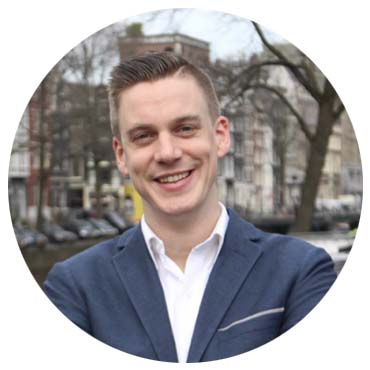
Business Analyst with a focus on AI.
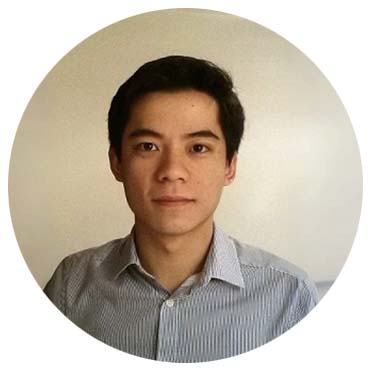
Yori studied physics and dental medicine at the University of Groningen obtained his PhD at the bioengineering department of UMCG. He is currently researching and developing new digital communication networks that support self-organization and collective action. In his work, he closely collaborates with Public-Ops, a national collective of entrepreneurs
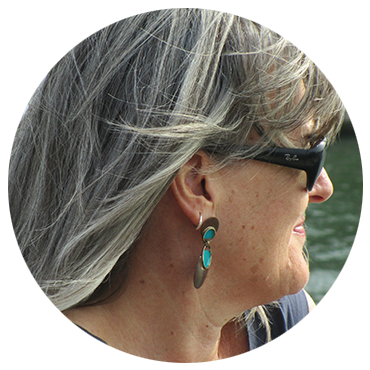
Marianne is Chair of Media, Cultural Industries and Society at the Centre for Media and Journalism Studies, University of Groningen, former Chair of the Global Internet Governance Academic Network (GigaNet) and the Internet Rights and Principles Coalition of the UN Internet Governance Forum, and founding member of the Digital Constitutionalism Network. Marianne has been active in negotiating digital human rights standards for sustainable technology design and use in internet policy-making spaces across the EU, Council of Europe, and the UN. A recipient of research funding from the US Social Science Research Council (SSRC), Ford Foundation, and Australian Research Council, Marianne was honoured as the 2022 Distinguished Scholar in Science, Technology, Art and International Relations at the International Studies Association.
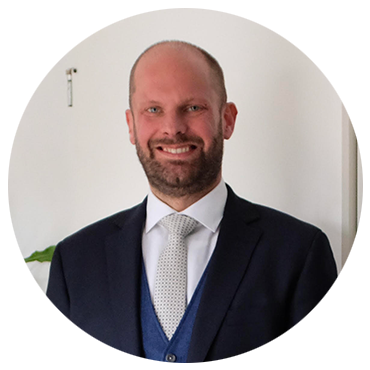
Richard Rijnks is an Assistant Professor in Spatial Analysis, GIS, and Planning Methods at the Faculty of Spatial Sciences University of Groningen. He is the Secretary of the Regional Science Association International - British and Irish Section and a fellow of the Aletta Jacobs School of Public Health and the Rudolf Agricola School for Sustainable Development. His main interests involve the use of geographic data to analyse questions around wellbeing, spatial quality, and economic development.
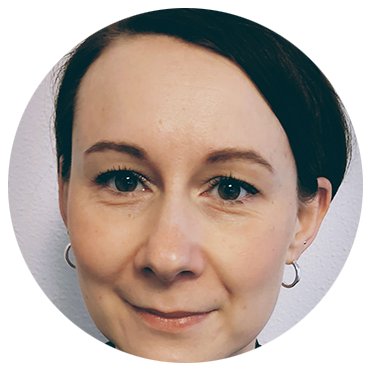
Babette Knauer is team leader of Communications at the University of Groningen Library. In this position, she has also been responsible for communicating about the UG's Open Science Programme. Babette is interested in mass communication instruments and their impact on the public sphere. She advocates for a shift in public institutions' communication strategies towards the use of open, decentralized channels.
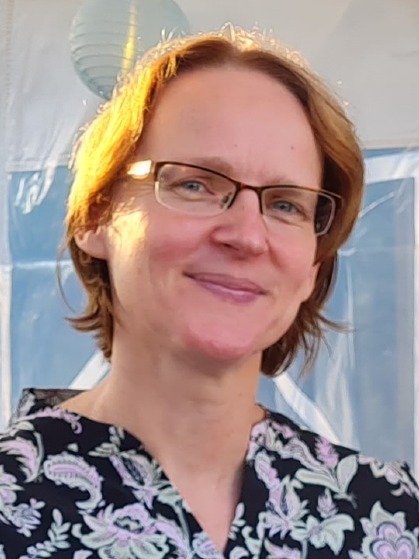
Drs. Marijke Folgering-van der Vliet
Programme manager Digital Autonomy and member of the UB management team