
PhD defence X. (Xinyu) Ma
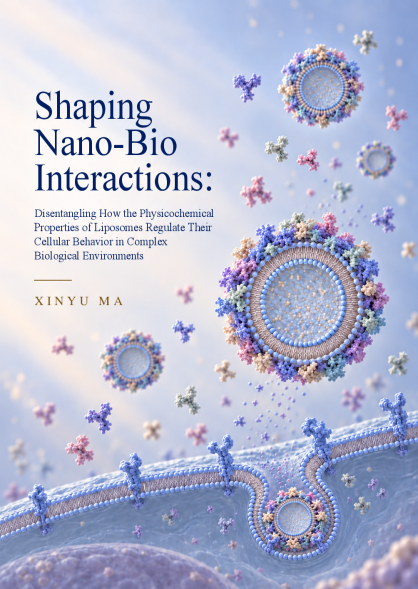
Shaping nano-bio interactions: disentangling how the physicochemical properties of liposomes regulate their cellular behavior in complex biological environments
Shaping nano-bio interactions: disentangling how the physicochemical properties of liposomes regulate their cellular behavior in complex biological environments
Nanoparticles with specific physicochemical properties can be designed to improve the precision and efficacy of drug delivery, yet translating these properties into predictable biological outcomes remains challenging. Before nanoparticles encounter cells, interactions with endogenous biomolecules in the fluids in which they are administered remodel their properties, and provide them a new biological identity that influences their interactions with cells.
This Thesis investigates how the physicochemical properties of liposomes, a widely used drug delivery platform, and the biological environment in which they are applied collectively shape their biological identity and subsequent cellular behavior. Our findings demonstrate that liposome properties, such as rigidity and size, influence cellular uptake and intracellular trafficking by shaping the interactions that liposomes establish with their surrounding biological environment. These interactions start with the adsorption of a biomolecular corona on their surface and continue with the resulting interactions with cell surface receptors and the subsequent cellular internalization process, ultimately determining liposome fate and biological performance at the cellular level. Similarly, studies performed under more physiologically relevant conditions, including endothelial cell barriers and higher serum concentrations, further confirm that the biological environment in which liposomes are applied changes their cellular uptake behavior and uptake mechanisms.
Overall, the findings in this Thesis highlight that nanomedicine behavior is shaped by both nanoparticle physicochemical properties and the complex biological environment in which they are applied. Disentangling these factors is required to improve our understanding of nanoparticle behavior in vivo and to provide a stronger foundation for the rational design of nanomedicines.
Supervisors:A. (Anna) Salvati, Prof, prof. dr. K. (Klaas) Poelstra